
How to Conduct PCN Wellbeing Temperature Checks
As Primary Care Networks continue to evolve and expand their multidisciplinary workforce, now is the perfect time to take a wellbeing temperature check of your team.
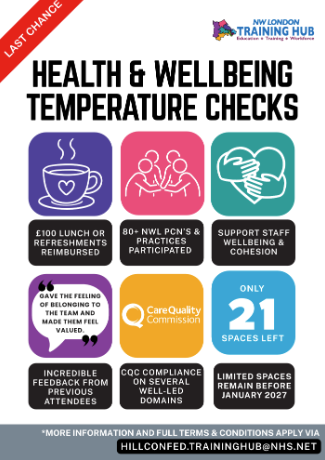
We are delighted to inform you our NWL Health & Wellbeing Practice and PCN Temperature Checks programme has been extended, giving more teams the opportunity to benefit. Join the 74 practices and PCNs across NWL that have already taken part.
Participating PCNs have brought their whole team together. Others have focused on a single ARRS role to celebrate successes and address key issues. Hear what our participants think:
- Clinical Director in Brent “The session was engaging and interactive and created a valuable opportunity to hear perspectives from across our PCN and from allied health, social care and neighbourhood colleagues. The in-person session and online survey provided a safe, protected space for reflection, for sharing what is working well, alongside identifying areas for development. The feedback from participants has been overwhelmingly positive and we very much welcomed the opportunity to participate”
- ARRS GP Assistant in Ealing “Very productive and gave us a safe space to talk”.
During a session, teams can:
- Claim up to £100 towards lunch reimbursement
- Take part in a fun icebreaker activity
- Discuss workplace pressures and well-being challenges
- Explore the experiences of ARRS and multidisciplinary staff working across multiple practices, sites, clinics and contracts
- Identify practical actions to strengthen staff well-being, engagement and team cohesion
- Contribute evidence towards several CQC domains
Additionally, these sessions provide a valuable opportunity for PCN colleagues, including Clinical Directors, PCN Managers and ARRS staff, to come together, reflect on current challenges, and celebrate successes as a team, while sharing best practices and building relationships across roles.
Moreover, they identify practical ways to support well-being across the network, including shared resources, peer support, workload management, and coordinated approaches to mental health and resilience. This collaborative focus helps standardise practices, aligns actions with local priorities, and strengthens cross-team communication for continuous improvement.

